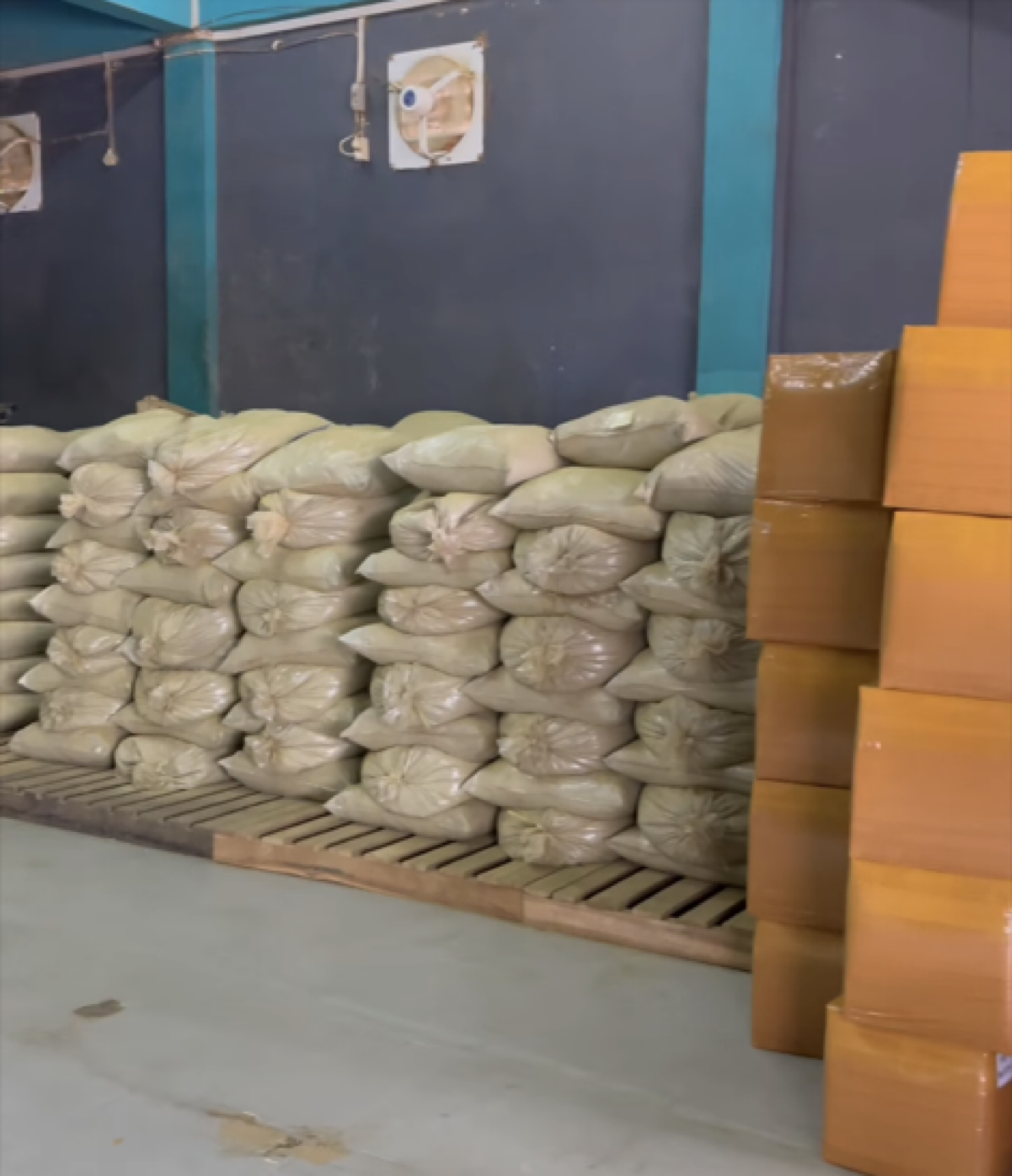
How international shipping records reveal who shipped kratom, who received it, how much arrived, and where it entered the United States.
Think of it as the shipping industry's receipt.
Every international shipment receives one. It is a legal document issued by a carrier to a shipper that details the type, quantity, and destination of the goods being carried.
A bill of lading identifies:
For investigators and policymakers, these documents are a window into the international supply chain. They do not prove regulatory compliance or violation, but they do reveal who is trading what, with whom, and at what scale.
Bills of lading help answer questions like:
The consignee field identifies the U.S. importer of record. This can reveal which companies are bringing kratom into the country.
The shipper field identifies the exporter. This can reveal supply relationships and recurring trading partners.
The weight and container fields reveal the scale of each shipment. Some exceed 80 metric tons.
The port of discharge shows where the shipment entered the country. This can reveal regional import patterns.
The cargo description field can reveal how the product was categorized, including phrases like "Not For Human Consumption."
Bills of lading do not establish FDA review, customs admissibility, or whether a law was violated. They are logistical documents, not enforcement records.
Bills of lading are a starting point for investigation, not a conclusion. They identify patterns worthy of further inquiry, but they do not prove how any particular shipment was handled by regulators.
Below is an annotated example from a real kratom shipment. Each field provides critical information for investigators.
This annotated example shows how each field contributes to the investigative picture. The product description, weight, and consignee are particularly revealing.
One shipment may appear multiple times in public databases. Understanding the difference between a master bill of lading and a house bill of lading explains why.
A master bill is issued by the carrier to the freight forwarder. A house bill is issued by the freight forwarder to each individual shipper or consignee. When a container holds goods for multiple buyers, the master bill covers the entire container while each house bill covers a portion of the cargo.
This is why the workbook shows 500 source records to 367 curated shipments. Multiple bills of lading can refer to the same physical container, and deduplication is necessary to avoid double-counting.
Investigative implication: When you see a shipment appearing multiple times in a database, it may not be multiple shipments. It may be multiple documents for the same container. Understanding master and house bills helps avoid counting the same cargo twice.
The cargo description is often the most revealing field on a bill of lading. In the kratom records analyzed for this investigation, the following descriptions appeared:
Wording varies. Some records describe the product with scientific precision. Others use generic or vague terms. Some explicitly state "Not For Human Consumption" or "External Use."
Public shipping records alone do not explain why these different descriptions appear. They may originate with the shipper, the freight forwarder, the carrier, or the importer. They may reflect how the product was marketed, how it was classified, or how it was documented for shipping purposes.
Important: The cargo description on a bill of lading is not necessarily the same as the customs entry description. It is a shipping document, not a regulatory filing. The relationship between the bill-of-lading description and the customs declaration is not established by public shipping records.
Every internationally traded product receives a customs classification under the Harmonized Tariff Schedule (HTS). The tariff classification helps U.S. Customs and Border Protection determine duty treatment and collect trade statistics.
In the kratom records analyzed, two primary HS headings appeared:
The records document the classifications that were used. They do not establish why different classifications appear. A different tariff heading may affect customs classification, duty treatment, and how the merchandise is described in trade data. But the public records do not establish whether the classification altered FDA screening or admissibility review.
Note: 1211.90 and 3101.00 are six-digit international HS-level headings. A complete U.S. HTS classification ordinarily extends beyond six digits. The public records analyzed for this investigation did not always contain the full ten-digit HTS code.
Every ocean container has a unique identifier.
This four-letter prefix (often the carrier code) followed by a six-digit serial number and a check digit is unique to that container.
Container numbers let investigators connect documents referring to the same physical container. When a master bill and a house bill share the same container number, it is evidence that they refer to the same cargo movement.
In the records analyzed, container numbers were essential for deduplicating shipments and ensuring that the same cargo was not counted multiple times.
Weight is one of the most straightforward fields on a bill of lading, but it is also one of the most revealing.
15,000 kg is 15 metric tons.
In the records analyzed, some shipments exceeded 80 metric tons.
Weight matters because it establishes scale. A 13.4-metric-ton shipment is not a small sample. It is industrial-scale commercial volume. When multiplied across hundreds of shipments, the total weight indicates a mature, large-volume trade.
Not all bills of lading are the same. Several variations appear in public shipping records.
Different freight forwarders and different carriers may use different formats. Some documents are more detailed than others. Some include additional fields like "Notify Party" or "Place of Delivery."
These variations are normal in international shipping. They do not indicate irregularity. But they do mean that investigators must carefully compare documents to ensure they are comparing like with like.
Bills of lading are logistical documents, not enforcement records. They cannot tell us:
Bills of lading are not evidence of regulatory compliance or violation. They are transportation records. They document what moved, not whether it was legal.
The purpose of analyzing bills of lading is not to prove wrongdoing. It is to identify patterns, ask informed questions, and direct further investigation.
Bills of lading can identify:
These are the building blocks of supply chain transparency. They do not tell the whole story, but they provide a foundation for asking the right questions.
When combined with other records — customs entry documents, FDA records, and company disclosures — bills of lading contribute to a fuller picture of how kratom enters the United States.