Start with the leaf
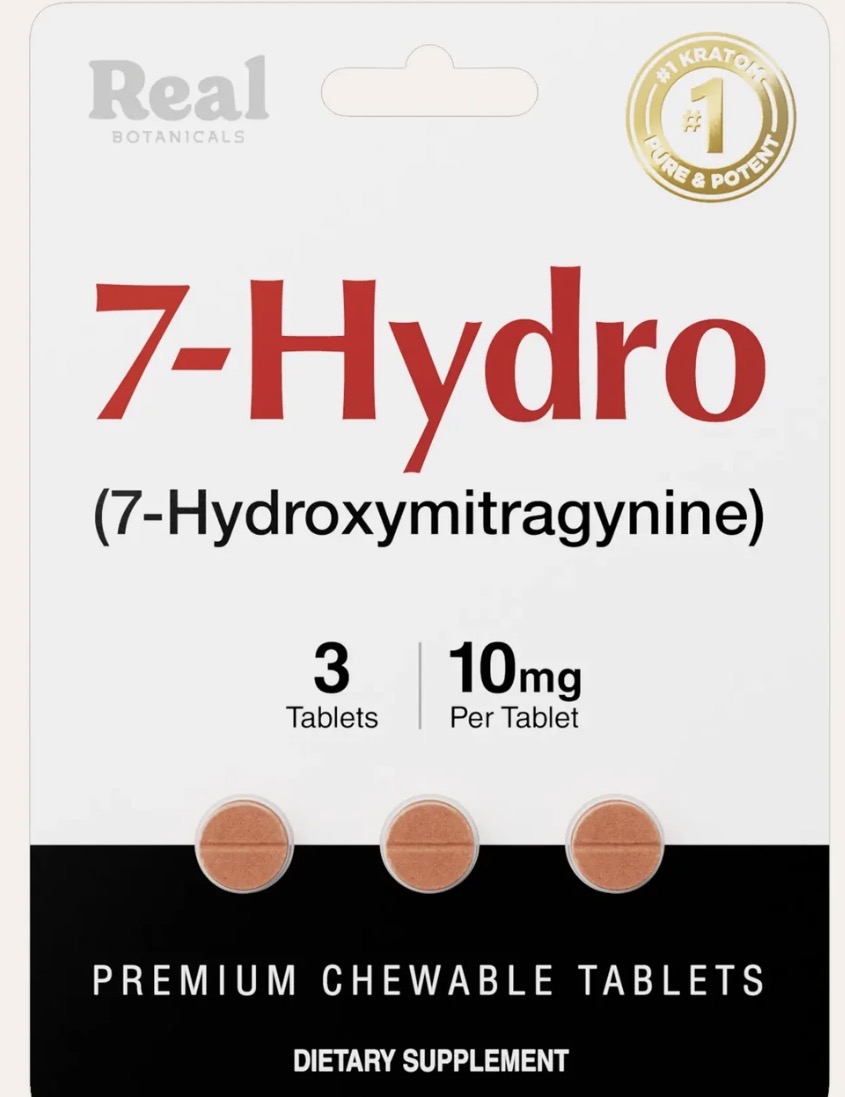
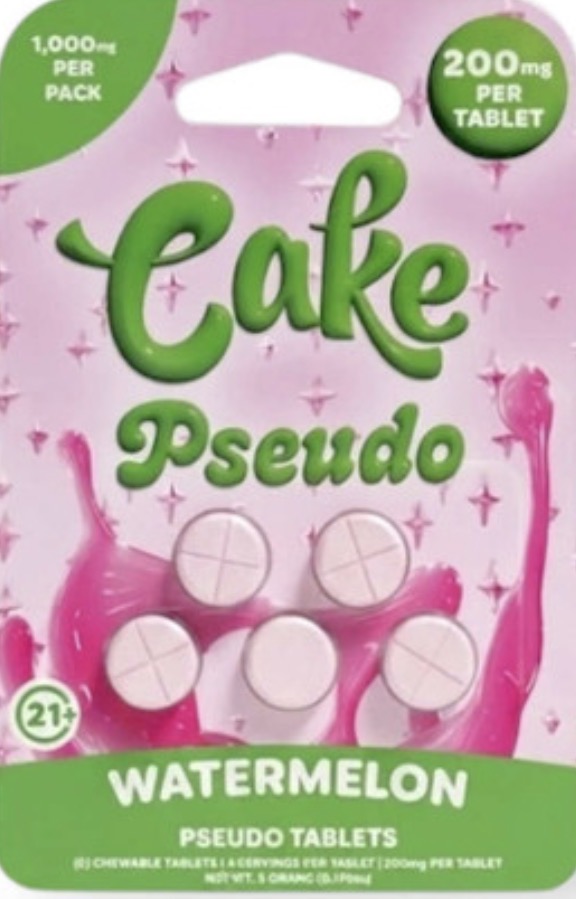
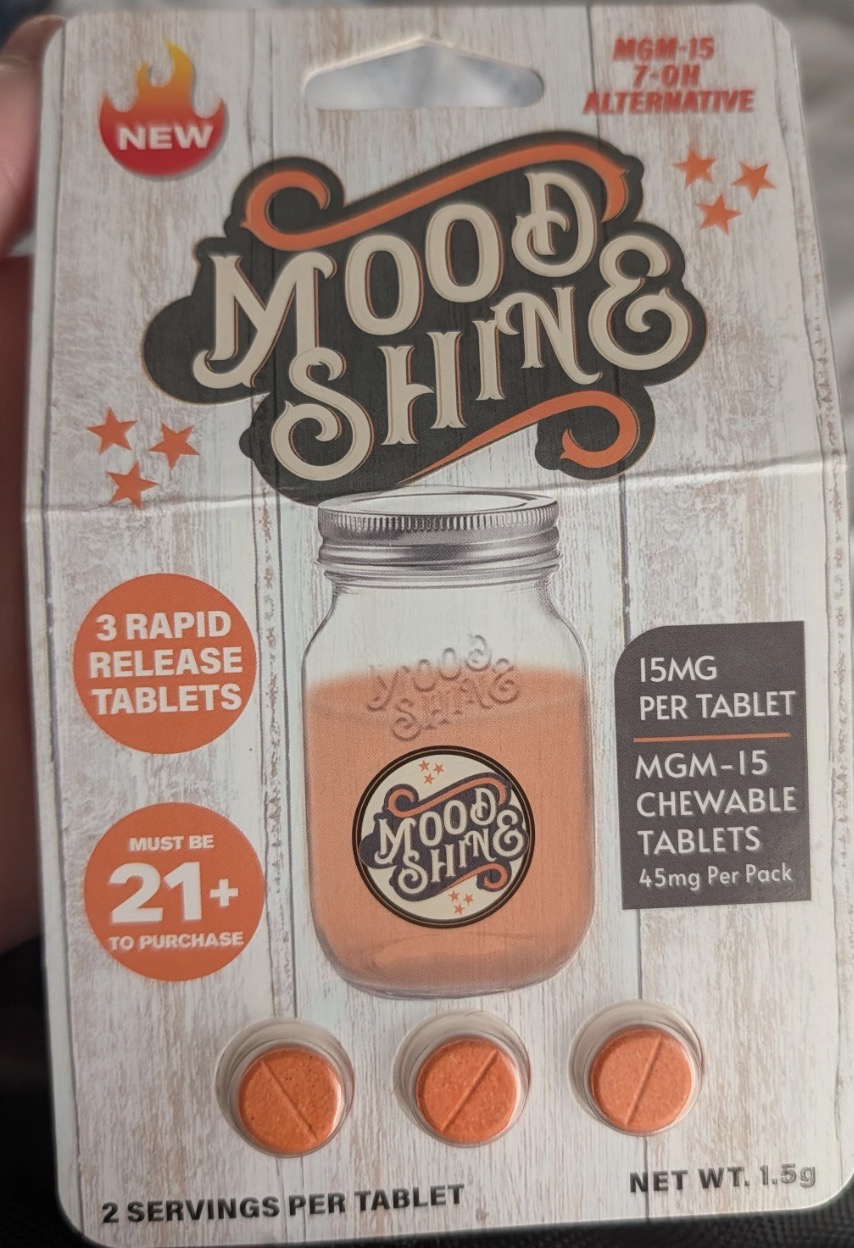
The products on today's shelves may be tablets, shots and gummies labeled 7-OH, pseudoindoxyl or MGM. They do not look like kratom leaf. But the evidence points back to the same starting material: raw Mitragyna speciosa, the kratom plant.
Kratom leaf contains mitragynine, its main alkaloid. Manufacturers can extract and purify that mitragynine, then chemically change it into other compounds. That is the bridge between a bag of plant material and a high-potency finished product.
The important point is simple: the finished chemical can be new even when the raw material that supplied its starting molecule was natural kratom.
How the products connect to kratom
Each product takes the chemistry another step away from the original leaf. The evidence lets us follow those steps backward.
| Product | Starts with | What that means |
|---|---|---|
| 7-OH | Mitragynine | Mitragynine is the main alkaloid in kratom leaf. Researchers found that concentrated 7-OH products have chemical signs of being made by changing mitragynine or mitragynine-rich kratom extracts, rather than by simply collecting the tiny amount of 7-OH naturally present in leaf.1 |
| MP | 7-OH, which comes from mitragynine | 7-OH is a step on the chemical path to mitragynine pseudoindoxyl, or MP. Researchers found MP in 33 of 35 commercial kratom-related products they tested.1 |
| MGM | A modified mitragynine-related compound | MGM names are used for newer compounds in the mitragynine family. Unlike the evidence for 7-OH and pseudoindoxyl, the exact manufacturing route must be established compound by compound. This page therefore does not claim that every MGM product follows the same path from raw kratom. |
Why manufacturers need mitragynine
Ordinary kratom leaf contains only trace amounts of 7-OH. That creates a basic supply problem: concentrated tablets can contain far more 7-OH than a small amount of untreated leaf could provide.
The 2026 Phytochemistry study addressed that problem directly. Researchers concluded that the high concentrations in modern 7-OH products point to chemical conversion of mitragynine isolates or whole kratom extracts. They also said that extracting enough naturally occurring 7-OH directly from unaltered leaf would not be economically practical.1
So manufacturers do not need kratom leaf to contain a tablet's worth of 7-OH. They need the leaf for what it contains in abundance: mitragynine.
The products carry fingerprints of the process
Researchers did not reach their conclusion from labels alone. They chemically tested products sold to consumers.
High-potency products also contained oxidation and rearrangement compounds that were not characteristic of ordinary kratom powders and capsules. Researchers described these as signs of shared chemical processing rather than normal differences between kratom plants.1
In plain English: the chemistry left evidence behind.
The patents show the same family tree
Patents describe ways to take mitragynine and produce 7-OH and other mitragynine-related compounds. Other patent material describes production of pseudoindoxyl-type compounds from upstream kratom alkaloids.45
A patent does not prove that every manufacturer follows that exact process. It proves something narrower: the chemical route from kratom's major alkaloid to these later compounds is known and documented.
Then a manufacturer showed the process at commercial scale
The industrial evidence closes an important gap between a chemistry paper and the retail market.
A published account of filming inside a commercial facility says production was followed beginning with kratom leaf extract, then through oxidation, laboratory testing, solvent recovery and purification.6
That does not prove every company uses the same equipment or method. It does show that the leaf-to-extract-to-modified-alkaloid chain is not merely theoretical. It has been used as an industrial process.
UNODC reached the same conclusion
The United Nations Office on Drugs and Crime reported that 7-OH occurs only as a minor constituent of kratom, that it is related to mitragynine, and that commercial 7-OH products are likely synthesized from purified mitragynine.2
UNODC also describes a growing market of semi-synthetic kratom-related tablets, strips, gummies, drink mixes, shots, syrups, vape products, capsules and powders.2
Again, the finished products are different. The starting chemistry points back to kratom.
The labels and court records connect the chemistry to commerce
One commercial 7-OH label filed in Missouri litigation states that its 7-hydroxymitragynine comes “from Mitragyna Speciosa Aerial Parts.”7 The same label warns that the product may contain mitragynine, 7-OH and mitragynine pseudoindoxyl.
Missouri's petition separately alleges that businesses commissioned and distributed products containing mitragynine, 7-OH, MGM-15 and other psychoactive alkaloids.8 Those allegations are not judicial findings, but they show how these compounds appear together in the commercial market.
“Synthetic” describes the change, not necessarily the beginning
This is where the public debate often gets tangled.
If mitragynine is extracted from natural kratom and then chemically changed into 7-OH, the 7-OH is a different finished chemical. If that material is changed again into pseudoindoxyl, another transformation has occurred.
None of that requires pretending that a pseudoindoxyl tablet is “natural leaf.” It plainly is not. But calling the tablet synthetic or semi-synthetic does not make its raw starting material disappear.
Natural source and chemically modified finished product can both be true at the same time.
A useful comparison: khat, and a caution about Spice
Khat shows why the source plant can matter. DEA describes khat as a plant containing the active chemicals cathine and cathinone. The plant and its active chemicals are related parts of the same drug story, even though isolating or modifying a chemical changes the finished material.10
Spice offers a different lesson and should not be treated as a chemical equivalent to kratom. DEA explains that synthetic cannabinoids used in Spice are laboratory-made chemicals that are commonly sprayed onto plant material. The plant material is mainly a carrier; it is not the botanical source of those synthetic cannabinoid molecules.11
That distinction makes the kratom evidence more important, not less. With 7-OH and pseudoindoxyl, the argument presented here is that the plant supplies the upstream alkaloid itself. Kratom provides mitragynine. Mitragynine can be chemically changed into downstream compounds. That is fundamentally different from taking an unrelated synthetic drug and spraying it onto leaves.
What “immediate precursor” means
A final legal distinction matters. A chemical can come before another chemical in a manufacturing chain without automatically becoming a federally designated “immediate precursor.” Under the Controlled Substances Act, that term has a specific legal definition and requires a federal determination.9
The evidence here establishes the chemical and manufacturing relationship. Whether a particular substance meets the federal legal test is a separate regulatory question.
Follow the molecule backward
Start with a pseudoindoxyl product and move upstream.
Pseudoindoxyl leads to 7-OH. 7-OH leads to mitragynine. Mitragynine leads to Mitragyna speciosa.
Now move forward. Raw kratom supplies mitragynine. Manufacturers can isolate that alkaloid and chemically change it. Those later compounds can then be purified, formulated and sold as tablets, shots, gummies and other products.
The finished products are not raw kratom. That was never the point.
The point is where the manufacturing chain starts.
Follow it far enough upstream, and the evidence leads back to the kratom leaf.
References and source documents
- Avula B, et al. “Quantitative analysis of 7-hydroxymitragynine in commercial kratom products and its stability under chemical and physiological conditions.” Phytochemistry. 2026;247:114871. Local copy.
- United Nations Office on Drugs and Crime. “Emergence of potent kratom-related products containing 7-hydroxymitragynine and/or mitragynine pseudoindoxyl.” August 2025. Local copy.
- Hill K, Boyer EW, Grundmann O, Smith KE. “De Facto Opioids: Characterization of Novel 7-Hydroxymitragynine and Mitragynine Pseudoindoxyl Product Marketing.” Drug and Alcohol Dependence. 2025;272:112701. Local copy.
- Patent literature. Mitragynine alkaloid chemistry and documented conversion pathways. Patent 1.
- Additional patent records. Patent 2 and Patent 3.
- Inside the Lab Where 7-OH Is Made. Industry account describing commercial production beginning with kratom leaf extract. Local copy.
- Affidavit of Vince Sanders, Exhibit 1. Missouri litigation exhibit containing commercial product labeling. Local copy.
- State of Missouri v. Relax Relief Rejuvenate Trading LLC, et al. Petition and related filing. Allegations described as allegations, not adjudicated facts. Local copy.
- Controlled Substances Act. 21 U.S.C. § 802(23), definition of “immediate precursor.”
- U.S. Drug Enforcement Administration. Khat fact sheet.
- U.S. Drug Enforcement Administration. Spice/K2 fact sheet.
This page distinguishes peer-reviewed findings, patent disclosures, industry statements and allegations in litigation. A cited manufacturing route does not establish that every manufacturer uses that route.