National surveys, poison‑center surveillance, mortality trends, and population‑level data related to kratom use and adverse outcomes in the United States.
Record high: 3,344 reports in a single year (CDC MMWR 2026). 1,200% increase from 2015 to 2025.
Source: America's Poison Centers NPDS; CDC MMWR 2026.
| Year | Jurisdictions | Deaths with kratom detected |
|---|---|---|
| 2020 | 32 | 866 |
| 2021 | 33 | 1,016 |
| 2022 | 34 | 1,017 |
| 2023 | 42 | 1,314 |
| 2024 | 43 | 995 |
Source: CDC SUDORS. 2024 apparent decline occurs despite expanded jurisdiction coverage (43 states). Testing practices and polysubstance patterns influence detection.
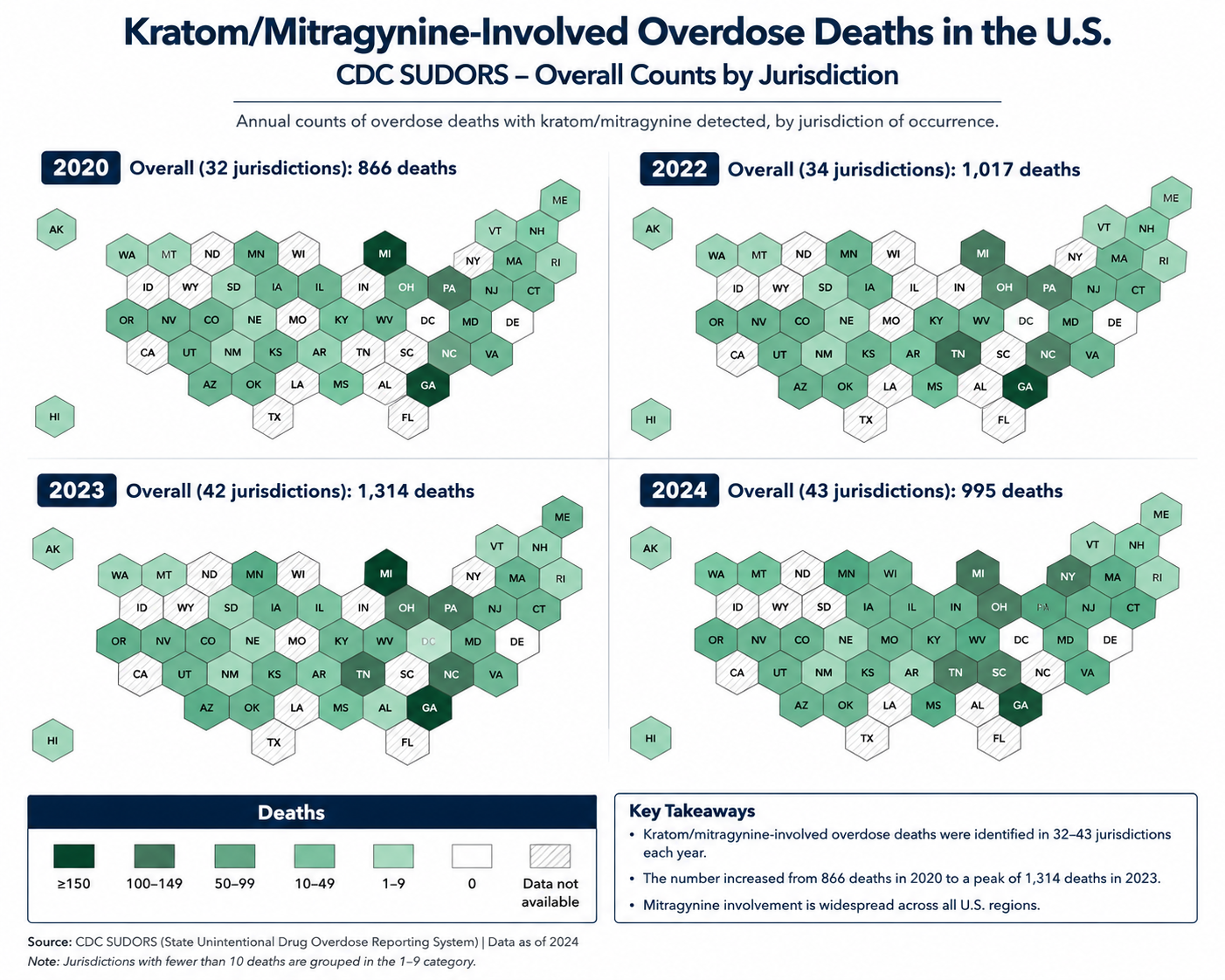
Click image to enlarge. Top jurisdictions (total deaths 2020–2024): Georgia (807), Michigan (412), Tennessee (286), Ohio (244), South Carolina (219), Florida (204), North Carolina (182), Pennsylvania (160), New York (148), Alabama (136).
| Year | Total Occurrences | Cause of Death | Present at Death | Cause % | Present % |
|---|---|---|---|---|---|
| 2020 | 246 | 166 | 80 | 67% | 33% |
| 2021 | 305 | 187 | 118 | 61% | 39% |
| 2022 | 308 | 172 | 136 | 56% | 44% |
| 2023 | 274 | 182 | 92 | 66% | 34% |
| 2024* | 224 | 131 | 93 | 58% | 42% |
*2024 interim/semi‑annual report. Across all years, mitragynine was determined to be a cause of death in the majority of detections – more often causal than incidental.
Estimated 1.7 million Americans aged ≥12 used kratom in 2021. Lifetime prevalence ~1.3%, past‑year 0.8% (≈2.1 million adults). Users more likely male, younger, and with higher rates of polysubstance use.
Read Study →First national U.S. prevalence estimate: 0.8% past‑year, 1.4% lifetime. Users tended to have more serious substance abuse profiles compared to non‑users.
View Study →From 2014–2019, 4.6% of kratom exposures (162 cases) were adults ≥60. Among ≥70 years, 21.9% were adverse reactions (drug interactions) – more than double the rate in younger adults. Neurological and cardiovascular effects common; 23 deaths reported.
Read Study →Total pediatric cases: 707 (2019–2024). Children under 5 are the largest age group; 2024 saw a record 107 exposures in <5 yrs. Pediatric exposures increased from 102 (2019) to 150 (2024), driven almost entirely by the youngest children.
Read Report →| Year | Moderate | Major | Death | Total Known | % Moderate/Major/Death |
|---|---|---|---|---|---|
| 2019 | 275 | 78 | 3 | 622 | 57.2% |
| 2020 | 259 | 66 | 5 | 564 | 58.5% |
| 2021 | 305 | 67 | 4 | 658 | 57.1% |
| 2022 | 248 | 55 | 3 | 539 | 56.8% |
| 2023 | 305 | 70 | 5 | 624 | 60.9% |
| 2024 | 332 | 76 | 7 | 740 | 56.1% |
2023 NPDS “New & Emerging” analysis: among single‑substance cases with known outcomes, 57.6% produced moderate/major/fatal effect – third‑highest after tianeptine and phenibut. 34.3% resulted in hospital admission.
152 deaths with kratom detected; 91 listed as cause. Fentanyl/fentanyl analogs present in 65%; heroin 33%; benzodiazepines 22%. Polysubstance use common, but kratom contributed causally in most cases where it was detected.
Read Report →Multiple‑substance exposures associated with 2.8× higher odds of hospital admission and 2.25× higher odds of serious medical outcome compared to single‑substance exposures.
Read Study →States with kratom bans had significantly lower exposure rates and severe outcomes than unrestricted or KCPA states, suggesting prohibition reduces polysubstance‑related harm.
Read Study →35 kratom‑positive deaths; in one case mitragynine was the sole intoxicant (950 ng/mL). Wide concentration range in fatalities shows no safe dose.
Read Study →Analysis of 6,860 blood specimens; mitragynine up to 11,000 ng/mL. Co‑positivity with fentanyl (62%) and methamphetamine (19%). High concentrations (>1000 ng/mL) associated with death.
Read Study →Population‑level surveillance data demonstrate increasing kratom‑related exposures, healthcare utilization, and severe outcomes across multiple demographic groups in the United States. Poison center calls have grown >1,200% in a decade, overdose deaths with kratom detection exceed 1,000 annually, and serious medical outcomes occur in more than half of single‑substance cases. Co‑exposure with fentanyl, benzodiazepines, and stimulants is common, but kratom is frequently determined to be a causal contributor in forensic and medical examiner investigations. These trends, documented by CDC NPDS, SUDORS, and state MEC systems, indicate that kratom represents a measurable and growing public health burden requiring continued surveillance and regulatory attention.